Sharks and more sharks!

Hello everyone!

As we have mentioned on our livestreams, there are more and more shark sightings on the spawning aggregation site. Sharks are so amazing and I know you all love to see them so here are a couple clips for sharks we have seen so far this years.

Can you identify the types of sharks they are? Leave your answers in the comments below and I will let you know if you got it right!


Nassau Grouper Color Phases

Color Phases!

Hello Everyone!

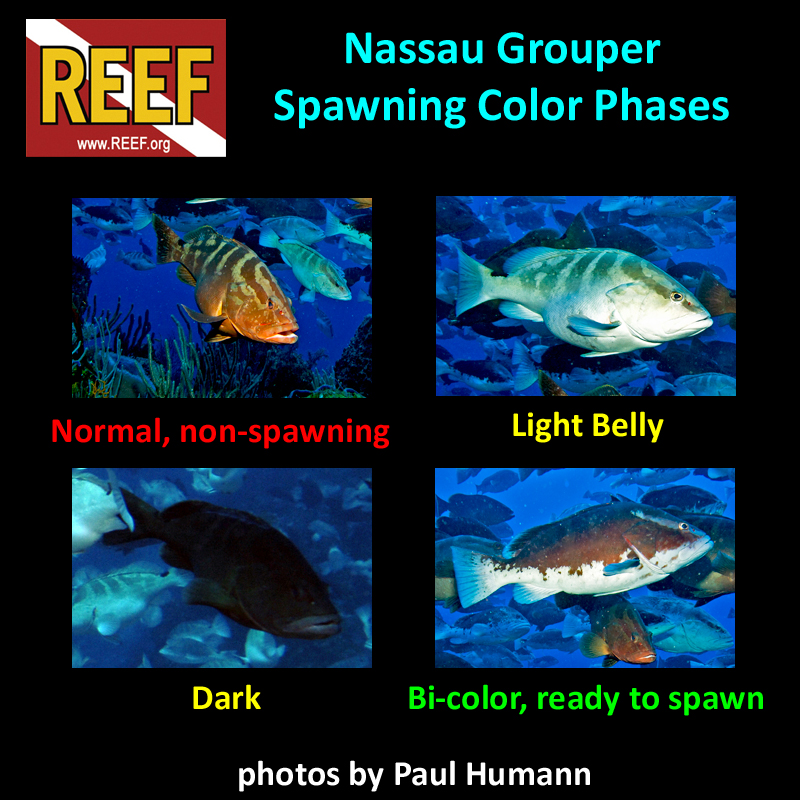
Nassau Grouper are truly a unique and beautiful fish. Something that really makes them stand out is their ability to change color. Much like an octopus, the Nassau Grouper can change their color in the blink of an eye. Grouper change their color for a number of reasons, such as camouflage. The Nassau can make itself lighter or darker to better blend in with its habitat.  Another purpose of its color changing behavior is for communication. The Nassau will often change its coloration when it encounters other Nassau, to let them know they see them. How cool is that?!

Here is a graphic showing the different color phases of the grouper:

Fish Faces!

Hello everyone!

It was so awesome to see you all on this morning’s livestream! You had the best questions!

If you remember, we talked about how Grouper Moon researchers have tagged the grouper each year, in order to help count them. However, we are trying to get away this since it is rather invasive.  In recent years we have been collecting images of the unique facial patterns on each Nassau. It turns out, these facial patterns are like ‘finger prints.’ Each grouper has their own, unique pattern that never changes, even as they get older and bigger. So, instead of tagging the fish, this year we are just take video of the fish and using AI and facial recognition technology to help identify and count the fish. How cool is that?!

Below are two pictures of the same Nassau Grouper. One was taken in 2013 and the other in 2019. Six years apart. Take a close look. Can you tell that they are the same fish?

Fish Faces

Big Breakers on Little Cayman!

Hello everyone!

Today was my first day on Little Cayman! All of the Grouper Moon researchers are here, but no one was able to dive on the aggregation today due to stormy weather. Take a look at this video I took today of the sea state on Bloody Bay Wall. In the 15 years I have been working on the Grouper Moon Project, I’ve never seen breakers this high. Easily 8-10 foot waves. Take a look at this video I took earlier today:

Bloody Bay Breakers

I’m so excited to see you all tomorrow on our first livestream of the year.  See you at 10:30!

Go Grouper Moon!


The Grouper Moon is almost here!!

The Grouper Moon is almost here!!


The moon is nearly full.

DOE and REEF scientists are on Little Cayman beginning their research and they say that Nassau Grouper are already gathering!

Remember to check in here at the Grouper Moon blog where I will be posting behind the scenes photos, videos, interviews and more!

Everyday I will be posting new and exciting content. Remember, you can leave comments on any of the blog posts. If you have any questions post then as well and I will respond promptly!

Go Grouper Moon!

Todd


Nassau Grouper can talk!

Hello Everyone!

Did you know that Nassau Grouper can talk to each other? Its true!

In 2017, Dr. Katherine Cameron, who was a student at SCRIPPS at the time, was working with hydrophones, which are underwater microphones, to collect the sounds, or vocalizations, the Nassau make. It turns out, grouper make a number of booms and grunting sounds!

Here is a picture of the hydrophone used to record the sounds the grouper make. It is called a Loggerhead DSG:

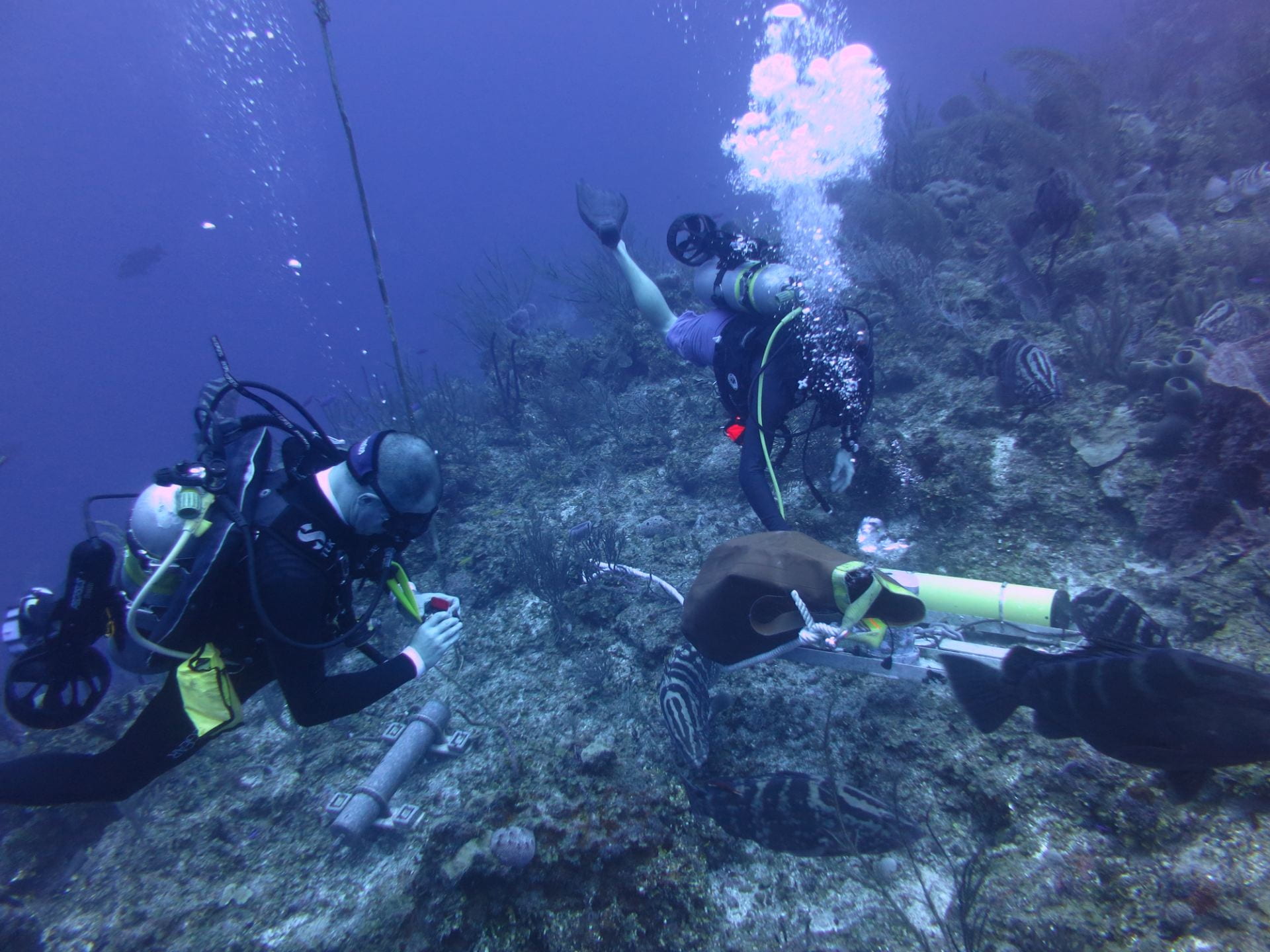
And here is a picture taken at the spawning aggregation site. On the left side of the photo, below the diver on the left, you can see a gray metal cylinder sitting on the ocean floor. That’s one of the two hydrophones we have at the SPAG. Can you find it?

Here are three sound files of different Nassau vocalizations recorded at the SPAG. Check it out and let me know what you think!

Go Grouper Moon!

Todd


Sharks on the SPAG!!

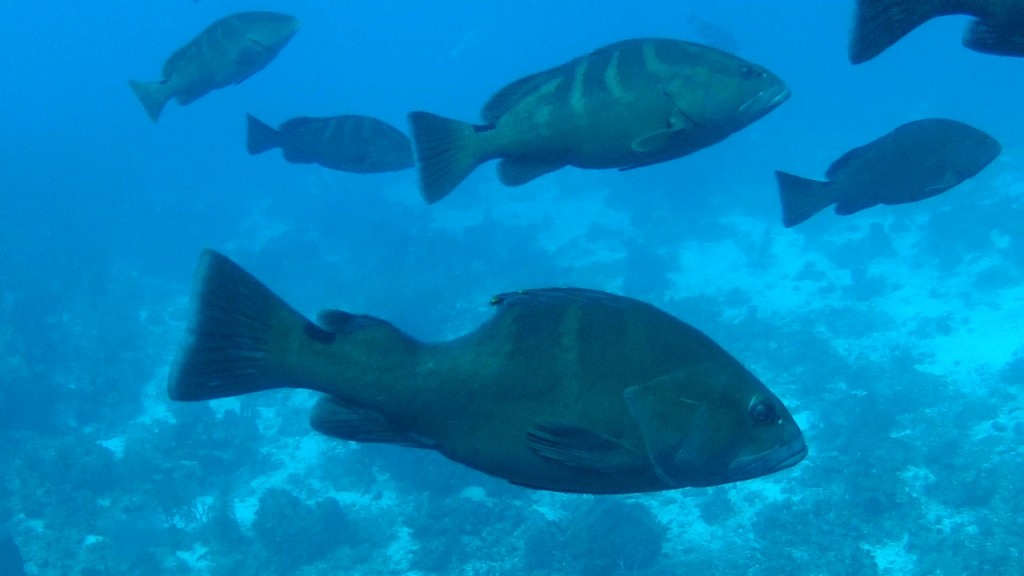
As the population of Nassau Grouper has increased on Little Cayman, so has the number of sharks visiting the spawning aggregation site in hopes of an easy meal. Here is a picture taken a couple years ago of a Hammerhead Shark on the SPAG. Click on the link below to see a video of the Hammerhead!
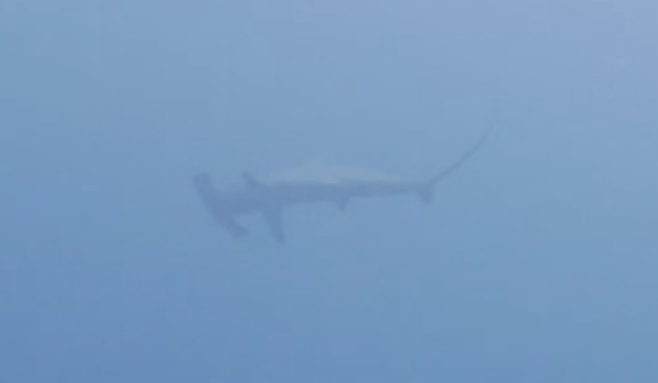
Hammerhead Shark Blog – Large 540p

Here is picture of a Blacktip Reef Shark circling the spawning aggregation:
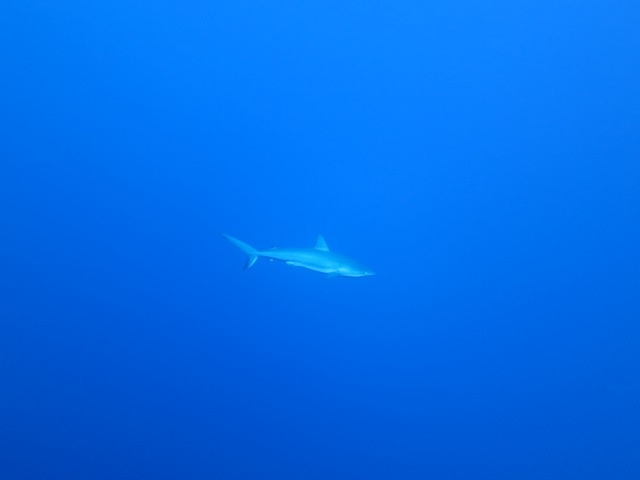
 

Speaking of sharks, during our last livestream, we talked about a Nassau Grouper we have seen multiple times on the aggregation who appears to have survived a shark attack. We call him Lucky. It is truly amazing that this fish not only survived a shark attack, but also continues to spawn on the aggregation!
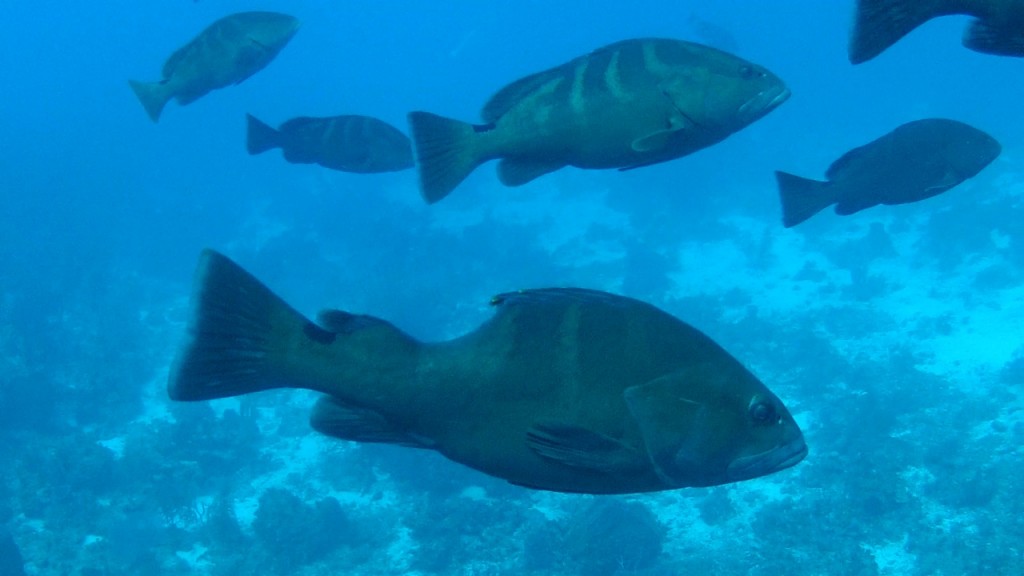
Lucky is one tough Nassau!

Can you guess what other species of sharks we have seen on the spawning aggregation? Post your ideas in the comments below!

Go Grouper Moon!

 

Counting Nassau Grouper

It was so wonderful to see everyone on yesterday’s livestream!

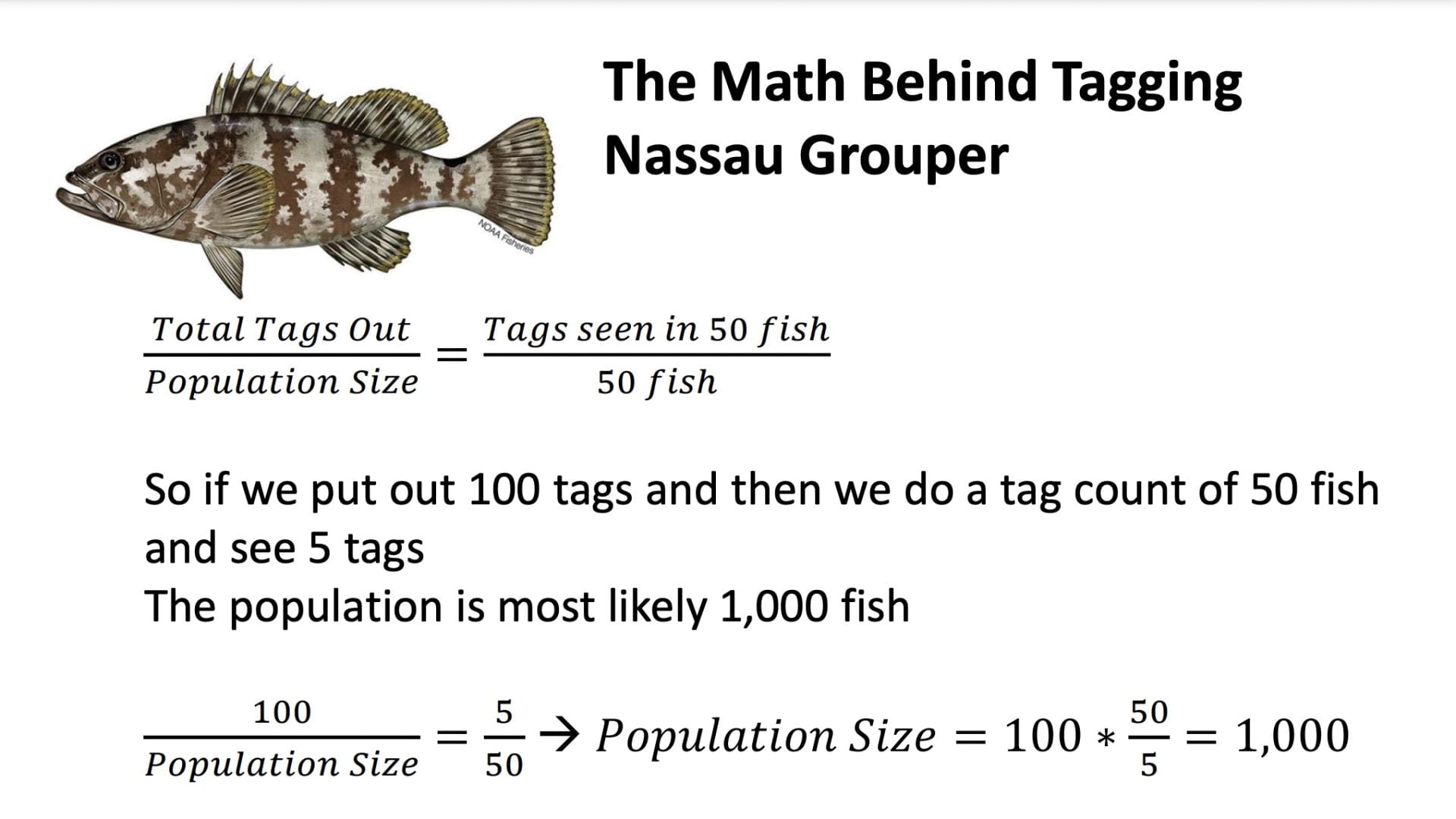
One of the topics we discussed was how the Grouper Moon researchers count all those fish, which is no small task. One way that we are estimating the number of fish is by tagging a set number of grouper with brightly colored tags. Once the tags have been placed on the fish, divers start counting fish. Each time, a diver will count 50 fish and then make a notation of how many of those fish have tags on them. We have several divers out there counting those fish, three times a day, collecting as much data as possible. We can then estimate the total number of fish based on the number of tagged fish we count.  Dr. Lynn Waterhouse created this is graphic just for you to explain the math behind tagging Nassau Grouper:

Changing Color!

Hello Everyone!

Nassau Grouper are truly a unique and beautiful fish. Something that really makes them stand out is their ability to change color. Much like an octopus, the Nassau Grouper can change their color in the blink of an eye. Grouper change their color for a number of reasons, such as camouflage. The Nassau can make itself lighter or darker to better blend in with its habitat.  Another purpose of its color changing behavior is for communication. The Nassau will often change its coloration when it encounters other Nassau, to let them know they see them. How cool is that?!

Here is a graphic showing the different color phases of the grouper:

Color Phases!